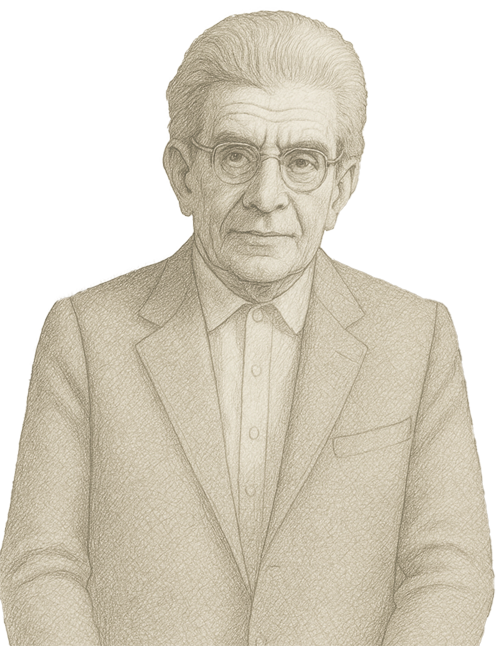
This interpreter will analyze your dream automatically using the principles of Lacanian dream analysis, powered by AI from Elsewhere Dream Journal.
The theories of Jacques Lacan, a French psychoanalyst active in the mid–20th century, offers one of the most challenging and perplexing methods for interpreting dreams. For Lacan, the unconscious is not a storehouse of symbols with fixed meanings but a
...read moreThe theories of Jacques Lacan, a French psychoanalyst active in the mid–20th century, offers one of the most challenging and perplexing methods for interpreting dreams. For Lacan, the unconscious is not a storehouse of symbols with fixed meanings but a mysterious process structured like a language. Dreams are not straightforward messages from the self but complex, often contradictory constructions that reveal the fractures, desires, and impossibilities at the core of psychic life. In Lacanian dream interpretation, the goal is not to uncover a hidden “truth” or offer reassurance. Instead, the dream is treated as a site where slips of language, unresolved contradictions, and unspoken desires co-exist. If the dream feels strange or incomplete, that strangeness is part of its meaning: it signals the limits of what can be articulated and points toward 'the Real', the part of lived experience that resists symbolization. One of the values of Lacanian interpretation is that it disrupts the temptation to settle for easy answers. By encountering the dream’s gaps, repetitions, and impossibilities, you are invited to confront how desire operates in your life -- what it seeks, what it avoids, and what it can never fully grasp. For contemporary Lacanians, this approach has persisted well beyond its mid-century Parisian origins. Today it finds a home in academic theory, clinical psychoanalysis, and even art and literary criticism, where the focus remains on how language, culture, and unconscious structures shape experience. Modern Lacanian dream work often adapts the framework to explore political, social, and digital realities while retaining its resistance to closure and its insistence that dreams are encounters with the limits of meaning itself. Choosing this prompt means your dream will be read for its tensions, contradictions, and structural features rather than for its repetitions, narratives, and themes. You can expect the analysis to focus on language, desire, and Lacan’s three registers (the Imaginary, the Symbolic, and the Real), always concluding with an open question designed to leave you in deliberate uncertainty where the dream can continue to work on you.
...read lessSummary by Kelly Bulkeley
Would you like an image of your dream?
Dream and interpretatation saved! Check your email, and your spam folder if necessary. If you'd like to add more dreams, use the magic link in your email to log into Elsewhere. Or just visit elsewhere.to any time and use your email address to log in.